
Pupil Mental Health and Wellbeing at Home Farm Primary School
Welcome: Why Mental Health Matters
At Home Farm Primary School, we want every child to feel safe, valued and ready to learn. Good mental health and emotional wellbeing help pupils to build positive relationships, enjoy school and achieve their potential. A growing body of national guidance highlights that schools play a key role in supporting children’s mental health through a whole-school approach, clear systems for support and strong partnerships with families. (GOV.UK)
We know that all children experience ups and downs. Some may also face more serious or longer-term difficulties with their mental health. Our aim is to notice concerns early, offer support in school and, where needed, help families to access specialist services.
Our Whole-School Approach
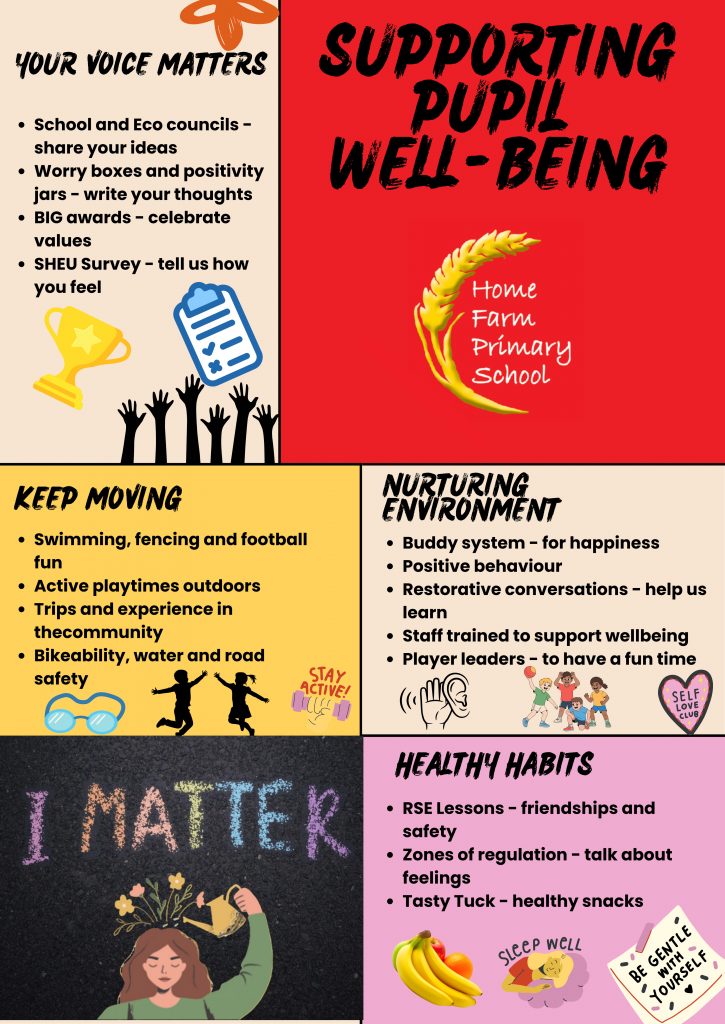
We follow a whole-school approach to mental health and wellbeing that includes:
- Relationships and belonging – warm, consistent relationships between staff and pupils, with a focus on kindness, respect and inclusion. (education.southwark.gov.uk)
- Curriculum – teaching about feelings, friendships, resilience and keeping safe through RSE lessons and assemblies.
- Safe, calm learning environments – clear routines, behaviour expectations and regulation strategies to help pupils feel secure.
- Pupil voice – opportunities for pupils to share their views and help shape our wellbeing work, for example through the School Council.
- Staff training – ongoing training so staff can recognise when a child may be struggling and know how to respond. (GOV.UK)
- Targeted support – small-group or individual support for pupils who need extra help, nurture sessions and confidence boosting soft start opportunities.
- Partnership with families and services – working closely with parents and external agencies (such as school nursing and children’s mental health services) when more specialist help is needed. (nhs.uk)
- E-safety –promoting healthy habits online, balancing screen time and positive social interactions digitally.ESCB – Online Safety
Pupil led strategies:
- Conversation Corner: Focuses on building oracy skills, including turn-taking and mixed interactions across year groups.
- Positivity Jars: Celebrate successes in pupils’ day; these are shared at the end of the day to reinforce positive experiences.
- Worry Boxes: Offer a subtle and safe way for pupils to raise a worry in class without feeling exposed.
- Music at Playtime: Creates a positive atmosphere and supports social connection.
- Buddy System and Play Leaders: Encourage peer support and inclusive play.
The Zones of Regulation at Home Farm
Understanding feelings with the Zones of Regulation
At Home Farm, we use the Zones of Regulation framework to help pupils notice and manage their feelings. The Zones of Regulation is a structured programme created by occupational therapist Leah Kuypers. It uses four coloured “zones” to describe how our body and brain might feel at different times and what we can do to regulate ourselves. (The Zones of Regulation)
We explain to pupils that all the zones are normal and okay. Everyone moves between zones during the day. The aim is not to stay in one zone, but to learn useful strategies so we can manage our feelings and make good choices.
The four Zones
- Blue Zone – low energy: feeling tired, sad, bored or unwell.
- Green Zone – “ready to learn”: feeling calm, focused, content or proud.
- Yellow Zone – heightened but still in control: feeling worried, silly, frustrated or excited.
- Red Zone – very intense feelings: feeling furious, out of control, terrified or overwhelmed.
We use the Zones to:
- Teach children a shared language for feelings.
- Help pupils notice their own zone and talk about what might have led to it.
- Introduce regulation tools (such as breathing exercises, movement breaks or quiet time) to help them move towards a zone that suits the activity they are doing. (socialthinking.com)
There are no “good” or “bad” zones. We encourage children to be honest about how they feel and focus on what might help, rather than on rewards or punishments.
How We Support Pupils in School
What this looks like in our classrooms
In everyday school life, pupils might:
- Check in with their Zone at the start of the day or after breaktimes using a visual chart or check-in board.
- Use agreed strategies if they notice they are moving into the Yellow or Red Zone, for example:
- taking a short movement break
- using a calm corner
- breathing exercises or sensory tools
- Talk with a trusted adult about things that are worrying them.
- Join small groups focusing on social skills, resilience or emotional literacy if they need extra support.
Staff use the Zones language to respond to behaviour, for example:
- “It looks like you might be in the Yellow Zone – feeling really frustrated. Let’s think about what might help you get back to Green.”
We also recognise that some children have additional needs or diagnoses which affect how they experience and express emotions. Staff work closely with our SENDCo and families to tailor strategies where needed:
- Daily check-ins using visual charts.
- Calm corners for self-regulation.
- Breathing exercises and sensory tools.
- Small groups focusing on social skills and resilience.
- MHFA-trained staff available for support.
Home Farm Initiatives:
- Inner Wings soft start group for confidence building and resilience.
- Listening Ears peer-support programme (coming soon).
How Families Can Help at Home
Using the Zones at home
Families can support their children’s emotional wellbeing and use the Zones of Regulation at home by:
- Talking about your own feelings using zone language (for example “I’m in the Yellow Zone because I’m rushing – I need a deep breath”).
- Asking open questions such as:
- “Which zone are you in after school today?”
- “What might help you move towards the Green Zone before bed?”
Creating a simple home tool kit with a few agreed strategies, such as:
- a cosy reading spot
- drawing or colouring
- a favourite toy
- a short walk, jump on the spot or time in the garden
- Reminding children that all feelings are allowed, while making clear that some behaviours need to be safe and respectful.
If you would like ideas about how to use the Zones at home, please speak to your child’s class teacher or contact the school office so we can arrange a time to talk.
When We Are Worried About a Pupil
What we do if we have concerns
Sometimes staff or parents notice a change in a child’s mood, behaviour, sleep, appetite or friendships. When this happens, we will:
- Notice and record concerns – staff share worries with the class teacher, SENDCo or a member of the safeguarding team. (NSPCC Learning)
- Talk with the pupil – in an age-appropriate way, giving them space to share how they are feeling.
- Contact parents or carers – to share concerns, listen to your perspective and agree next steps.
- Offer school-based support – for example extra check-ins, small-group work or adjustments in class.
- Seek advice from external services where needed – for example school nursing, mental health support teams or CAMHS, always involving parents in this process. (NHS England)
If we have any concern that a child may be at risk of harm, we follow our Safeguarding and Child Protection Policy and may need to share information with other agencies to keep them safe.
If you are worried about your child’s mental health, please talk to us as soon as possible. You can also contact your GP or NHS 111 for advice. If you believe your child is at immediate risk of harm, call 999.
8. Further help and support
Helpful organisations and resources
You may find support from:
- Your GP or the school nursing service
- NHS children and young people’s mental health services (sometimes called CAMHS) (nhs.uk)
- National helplines for children, young people and families
- Local authority or voluntary-sector services that support children’s mental health and family wellbeing (Education Hub)
School staff can help signpost you to appropriate local services.
9. Policies and key documents You can read more detail about our approach in the following policies, available on our Policies page:
• Positive Behaviour Management Policy
• Safeguarding and Child Protection Policy
• SEND Information Report